Most service calls in Milwaukee start with the same complaint: the washer doesn’t drain. A modern washer depends on quick, complete draining to spin clothes dry and prepare for the next cycle. When water lingers in the tub, everything slows down: cycles stall, clothes stay heavy and wet, odors build, and bearings work harder than they should. From Bay View bungalows to condos in the Third Ward, drain issues top the chart for Milwaukee washing machine repair.
Why draining fails so often
A washer pumps out dirty water through a short, hard-working path: tub to drain filter, filter to pump, pump through the drain hose, and hose to the standpipe. Any restriction along that path cuts flow. Lint sludge, a stray sock, coins, hair ties, detergent residue, and, in older homes, a partially clogged standpipe can all create a choke point. The pump runs hot, time stretches, and the control board eventually throws an error.
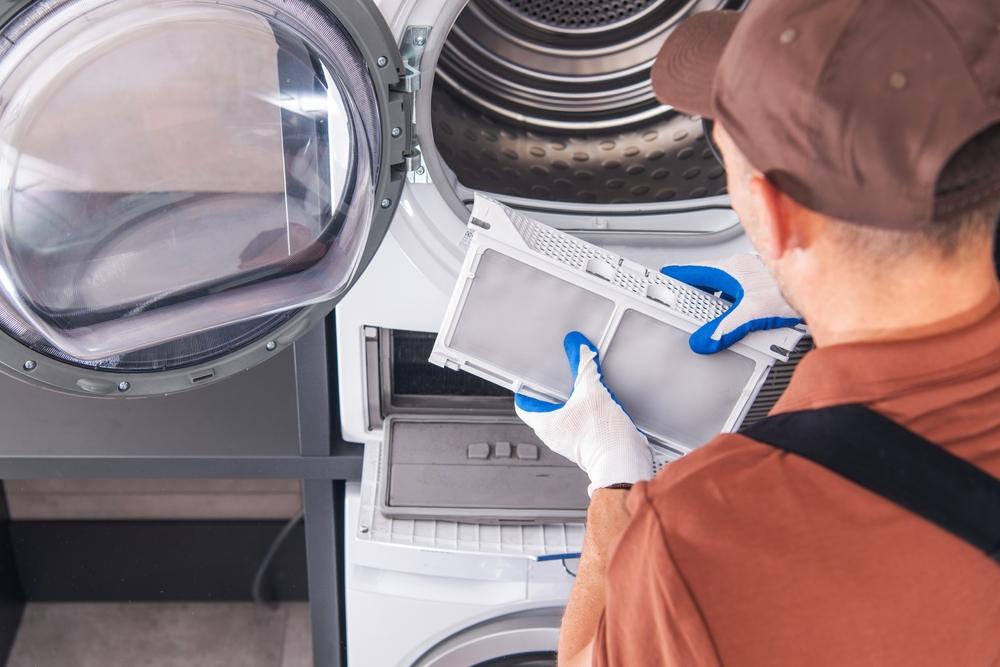
Front-load units tend to show this sooner because they trap more lint at the filter. Top-load impeller washers in Milwaukee’s hard-water zones also struggle, since mineral scale and concentrated detergent can cake inside hoses and filters.
Signs the washer isn’t draining right
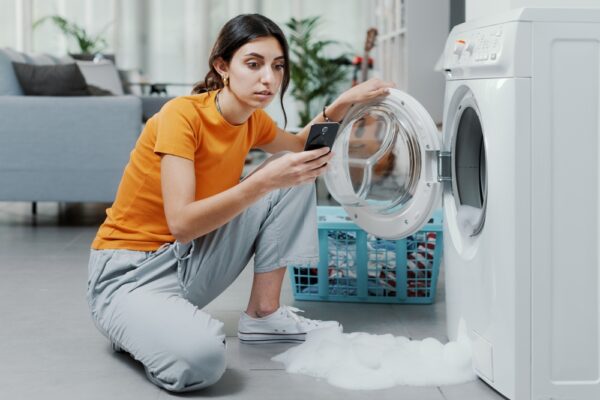
The symptoms are consistent across brands. Water remains in the drum after the cycle. The spin cycle starts, then stops and tries again. The washer hums, but the tub barely moves. Musty odor develops even after a “clean washer” cycle. Error codes pop up: OE, E13, F21, ND, or “drain” messages depending on the manufacturer. On site, technicians often find the pump hot to the touch and the filter packed with lint strings and coins.
Quick checks homeowners can do safely
Before calling for Milwaukee washing machine repair, there are a few simple checks that rarely risk damage and sometimes solve the problem.
- Confirm the drain hose height and kink-free routing. The hose should loop up to roughly 36 to 48 inches above the floor and seat securely in the standpipe without being taped shut. Open and clean the drain filter if the model has a service door. Place a shallow pan and towels, loosen the cap slowly, and remove debris. Re-seat the cap firmly. Power-cycle the unit for two minutes to reset the control, then run a drain and spin cycle with an empty drum. Reduce detergent. For HE washers, use about two tablespoons of HE detergent per load, less in soft water. Check the standpipe for slow flow. If the standpipe overflows or gurgles loudly, the home’s drain may need clearing.
If these steps don’t restore normal draining, the pump may be weak or blocked internally, or a foreign object may be stuck in the sump hose. At that point, a service visit makes sense.
Why this matters in Milwaukee homes
Local water conditions and older plumbing play a role. Many Milwaukee neighborhoods, especially older East Side and Riverwest homes, use standpipes with tight bends Milwaukee washer repair or dated traps that grab lint. Hardness levels vary by block, and mineral scale accelerates buildup in hoses and filters. Winter laundry routines also add bulky items like hoodies and towels that shed more lint. This mix explains why drain calls spike after holidays and at the start of spring.
What a technician checks during a drain service
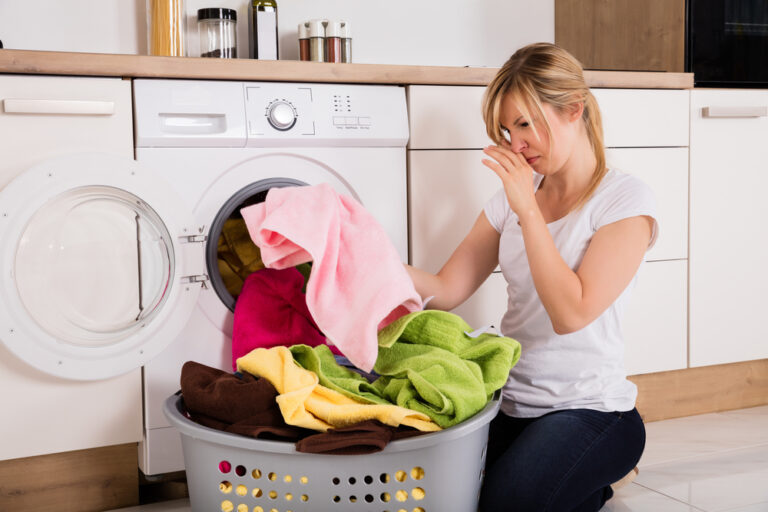
A proper visit follows a sequence that saves time and protects the machine. Milwaukee washing machine repair uniquerepair.com First, verify power, door lock function, and error history from the control. Next, inspect the drain hose for kinks, crushed spots behind tight laundry closets, and evidence of backflow at the standpipe. Then, open and clean the drain filter and sump, looking for coins, bra wires, and zipper pulls.
If the filter is clear yet the pump hums, the tech tests the pump impeller for wobble and checks windings with a meter. A weak pump draws wrong amperage and struggles under load. On many Samsung, LG, and Whirlpool models, replacing the pump module is straightforward and typically restores full function. If the pump checks out, the tech inspects the pressure hose and air trap for soap sludge, since a clogged pressure system can misreport water level and block spin.
In some homes, the machine drains well into a bucket but not into the standpipe. That’s a plumbing issue, and a referral is honest and faster than replacing parts that won’t fix the root cause.
Other common washer problems, ranked by frequency
Drain failures lead, but they share the podium with a few regulars in Milwaukee washing machine repair.
- Won’t spin or leaves clothes soaking wet: Often caused by unbalanced loads, a failing lid or door lock, a worn drive belt, or a bad clutch assembly on certain top-loaders. Won’t fill or fills slowly: Clogged inlet screens, stuck water valves, or low household water pressure. Older valves suffer from sediment; a quick valve replacement usually solves it. Leaks on the floor: Door boot tears, loose hose clamps, cracked drain pump housings after a freeze, or a pinhole in the tub-to-pump hose. Loud during spin: Worn tub bearings and a tired spider arm on some front-load models. This repair is more involved and may warrant a cost-benefit discussion on older units.
These issues overlap. For example, a machine that cannot drain fully will not spin well, so fixing the drain often removes the spin complaint too.
Preventing drain problems without overthinking it
Simple habits make the biggest difference. Use less detergent. Modern HE machines need far less soap than most bottles suggest, especially with water softeners. Keep pockets clear of coins and keys. Wash pet hair throws and heavily linting towels on shorter cycles, then run a quick rinse-only cycle afterward to flush lint. Clean the drain filter every one to three months, with a shorter interval for large households or pet owners. Leave the door open between loads to dry the tub and reduce residue.
For tight laundry closets common in Walker’s Point and Wauwatosa duplexes, leave an inch of clearance behind the unit so the drain hose does not flatten against the wall. If the standpipe is older cast iron and gurgles, schedule a plumber before a heavy laundry weekend.
Cost talk: repair or replace
For most drain failures, parts fall in the low to mid range. A new pump assembly often lands in a modest price bracket and can extend a washer’s life by two to four years. If the machine has additional age-related issues, like bearing growl or repeated control faults, a tech may suggest a replacement timeline. Unique Repair Services shares clear estimates up front and respects the customer’s threshold. The goal is to stop the leak or restore draining on the first visit, then help the homeowner decide the next step with real numbers.
Brands and quirks seen in Milwaukee
LG and Samsung front-loaders frequently present with clogged filters holding coins and hair ties. Whirlpool and Maytag top-load belt-driven units show worn belts after years of heavy towel loads. GE models sometimes throw pressure sensor codes that tie back to a soap-clogged air dome. Speed Queen machines in multi-family settings hold up well but can still clog at the pump after a coin spill. The patterns are predictable, which helps a local tech arrive with the right parts.
Why a local team helps
Local routes matter. A team that services the North Shore in the morning and West Allis in the afternoon knows which buildings have tight laundry closets, which standpipes run slow, and what error codes pop up after last week’s power flicker. That knowledge speeds diagnosis and cuts repeat visits. It also helps with honest advice about whether a persistent drain problem is the washer or the plumbing.
Ready for fast Milwaukee washing machine repair
If a washer leaves water in the tub, shows a drain error, or refuses to spin clothes dry, quick attention prevents pump burnout and mold growth. Unique Repair Services, Inc. handles same-week appointments across Milwaukee, including Bay View, Wauwatosa, Shorewood, Glendale, and West Allis. The team arrives with common pumps, clamps, and hoses for major brands, cleans filters, tests flow, and repairs on the spot whenever possible.
Call or book online for Milwaukee washing machine repair. Share the brand, model, and symptom. If there is standing water, mention it. A few details upfront help the technician bring the right parts and get the washer back on schedule in one visit.
Unique Repair Services, Inc. provides washer repair in Milwaukee, WI. Our local technicians service all washer types and brands, fixing leaks, drainage problems, spin issues, and electrical faults. We help Milwaukee homeowners get their laundry back on track quickly using trusted repair methods and quality parts. From front-load to top-load models, we restore washers to reliable working condition. We focus on clear communication, dependable service, and fair pricing for every job in the Greater Milwaukee Area.
Unique Repair Services, Inc.
Milwaukee, WI, USA
Phone: (847) 231-2812
Website: https://uniquerepair.com/service-areas/milwaukee-wi
Social Media: Facebook, LinkedIn
Find Us on Map: Google Maps